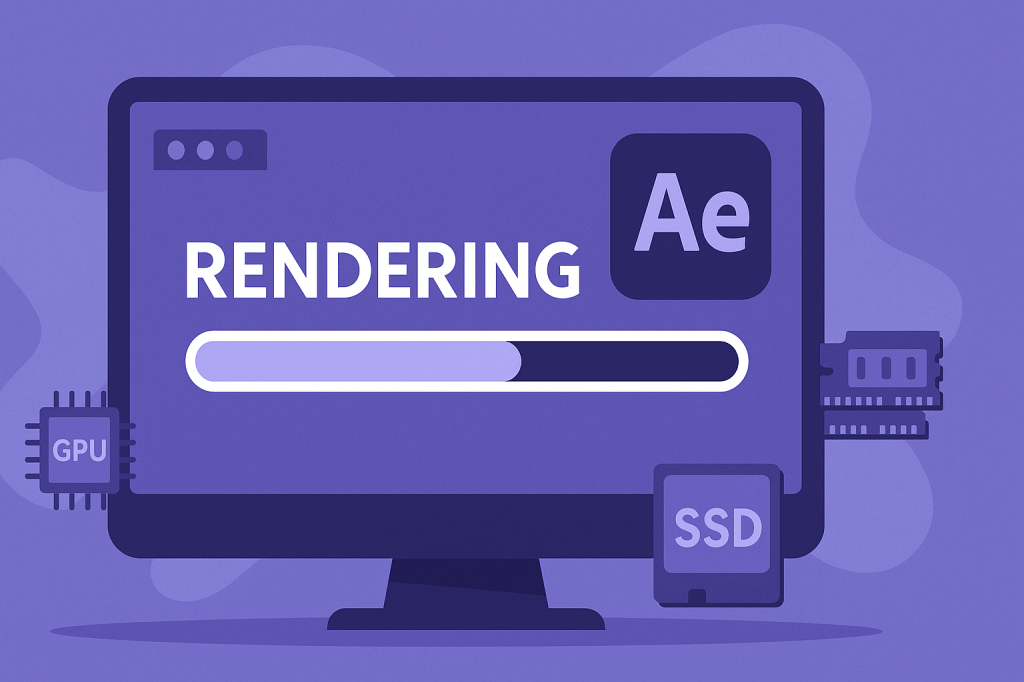
Rendering can be one of the most frustrating parts of working in Adobe After Effects. Long render times slow down projects and eat into creative energy. Luckily, there are proven techniques to optimize performance and cut down those wait times.
🖥️ Step 1: Optimize Your Project
- Pre-render complex comps: Turn heavy layers into pre-rendered videos to reduce processing.
- Clean project files: Delete unused assets and comps to reduce memory usage.
- Work in proxies: Use lower-resolution versions of large footage during editing.
⚡ Step 2: Adjust Preview & Render Settings
- Preview at lower resolution: Switch to ½ or ¼ resolution when editing.
- Skip frames during previews to test motion quickly.
- In Render Queue, choose Best Settings only for final exports. Use Draft settings for tests.
🎬 Step 3: Use Adobe Media Encoder
Instead of rendering directly in After Effects:
- Go to Composition > Add to Adobe Media Encoder Queue.
- Choose H.264 or HEVC for faster, compressed exports.
- Media Encoder uses background rendering, letting you keep working in AE.
🔧 Step 4: Hardware & Preferences
- Enable GPU acceleration (File > Project Settings > GPU).
- Increase RAM allocation in Preferences > Memory & Performance.
- Store cache on a fast SSD for smoother previews.
- Purge cache regularly (Edit > Purge > All Memory & Disk Cache).
🛠️ Step 5: Use Multiprocessing (2025 Update)
Adobe’s 2025 update improved multiprocessing:
- AE now uses multiple CPU cores for faster rendering.
- Check under Preferences > Memory & Performance to enable.
🎯 Final Thoughts
Speeding up rendering isn’t about one magic button — it’s about smart workflows. By pre-rendering, using proxies, and leveraging Media Encoder, you’ll save time and stress.
👉 Ready to experience smoother performance? Download Adobe After Effects free trial and try these render optimizations today.